Italy · 43.43° N, 12.37° E
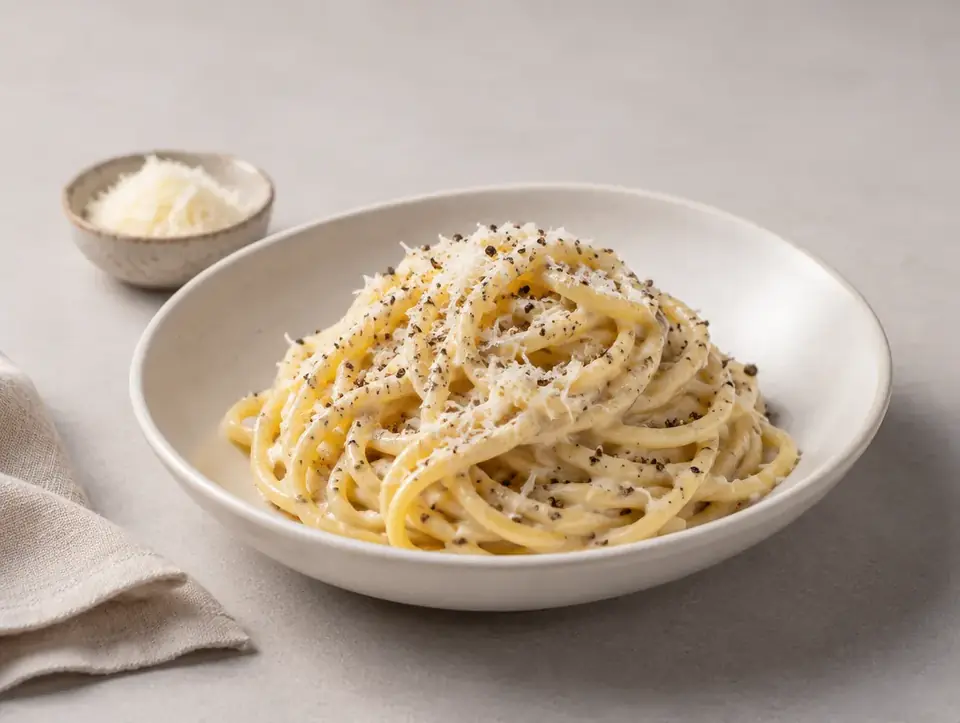
Cacio e Pepe
Pasta, pecorino, and cracked pepper. Nothing else, and nowhere to hide.
At a glance.
Cacio e Pepe comes from Italy and appears in The Dinner Atlas, in the chapter Pasta & Noodles. It serves 4, is made on the stovetop, and uses 4 ingredients and 8 steps.
- Yield
- Serves 4
- Method
- Stovetop
Ingredients
Tap an ingredient to tick it off.
Method
-
Crack the peppercorns coarsely with a pestle or the base of a pan, so you get fragments rather than dust.
-
Toast the cracked pepper in a dry pan over medium heat for 60 seconds, until it becomes intensely fragrant.
-
Cook the pasta in less water than usual and salt it lightly. Less water means starchier water, and pecorino is already salty.
-
Grate the pecorino to a fine powder. Coarse cheese will clump instantly.
-
Ladle some hot pasta water into a bowl and let it cool for a moment, then whisk in the pecorino to form a smooth paste.
-
Drain the pasta, saving plenty of water, and add it to the pan with the toasted pepper.
-
Take the pan off the heat, add the cheese paste, and toss hard, loosening with pasta water until it turns creamy.
-
Serve immediately, while it is still glossy.

Where it comes from
Cacio e pepe comes from the shepherds of Lazio, who carried aged pecorino and dried pasta into the hills. It has three ingredients, which is exactly why it is one of the hardest dishes in Italian cooking to execute well.
Cacio e Pepe: quick answers
How many does this Cacio e Pepe recipe make?
This recipe serves 4.
Where does Cacio e Pepe come from?
Cacio e pepe comes from the shepherds of Lazio, who carried aged pecorino and dried pasta into the hills. It has three ingredients, which is exactly why it is one of the hardest dishes in Italian cooking to execute well.
What is the secret to a good Cacio e Pepe?
Let the pasta water cool slightly before it meets the cheese. Boiling water turns pecorino into rubber bands.
More from Italy






More in Pasta & Noodles
https://www.atlasserie.com/recipes/dinner/cacio-e-pepe/