Japan · 36.01° N, 136.71° E
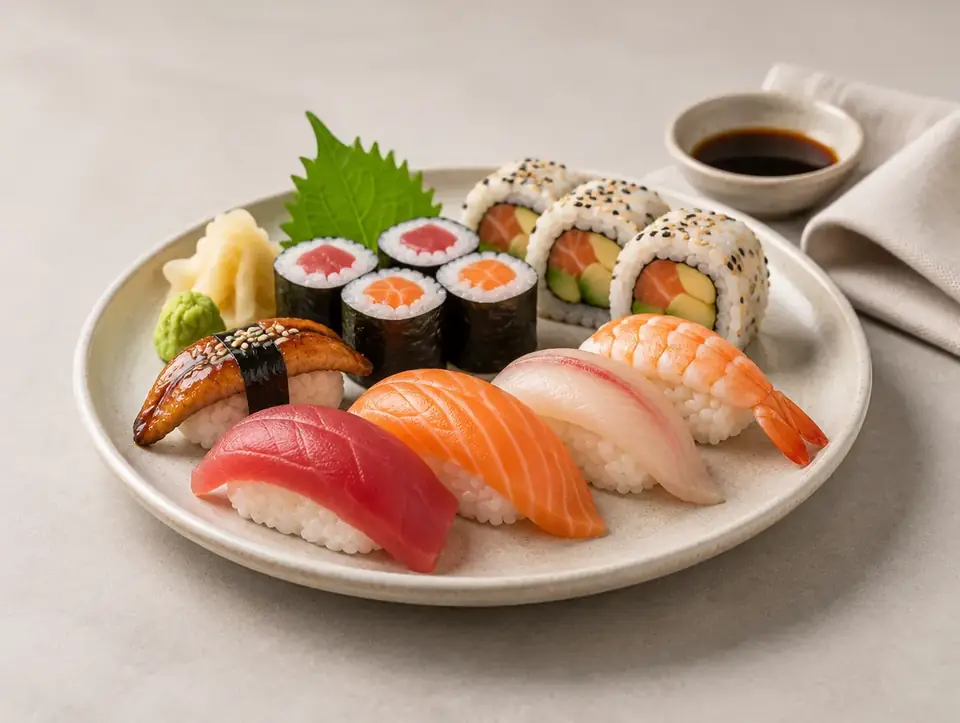
Sushi Platter
Nigiri and rolls made from seasoned rice and pristine fish.
At a glance.
Sushi Platter comes from Japan and appears in The Dinner Atlas, in the chapter Dinner Around the World. It serves 4, is made on the stovetop, and uses 8 ingredients and 8 steps.
- Yield
- Serves 4
- Method
- Stovetop
Ingredients
Tap an ingredient to tick it off.
Method
-
Rinse the rice in cold water, changing it repeatedly, until the water runs completely clear. This can take five or six rinses.
-
Cook the rice, then let it stand covered off the heat for 10 minutes.
-
Warm the vinegar, sugar, and salt until dissolved, then fold it through the hot rice with a cutting motion using a flat paddle.
-
Cut, do not stir. Stirring crushes the grains and turns sushi rice into paste.
-
Fan the rice as you fold to cool it quickly and give it a glossy sheen. Cool it to body temperature, never to fridge-cold.
-
Slice the fish against the grain with a very sharp knife, in single confident strokes.
-
For nigiri, wet your hands, form a small oblong of rice, dab it with wasabi, and drape the fish over it.
-
For maki, spread rice thinly over nori, add the filling, and roll tightly with a mat, then cut with a wet blade.

Where it comes from
Sushi began as narezushi, a method of preserving fish in fermented rice, where the rice was discarded. Modern nigiri is a fast-food invention of nineteenth-century Edo, served from street stalls.
Sushi Platter: quick answers
How many does this Sushi Platter recipe make?
This recipe serves 4.
Where does Sushi Platter come from?
Sushi began as narezushi, a method of preserving fish in fermented rice, where the rice was discarded. Modern nigiri is a fast-food invention of nineteenth-century Edo, served from street stalls.
What is the secret to a good Sushi Platter?
Keep a bowl of water with a splash of vinegar beside you and wet your hands constantly. Rice sticks to everything else.
More from Japan
More in Dinner Around the World
https://www.atlasserie.com/recipes/dinner/sushi-platter/