North America · Brunch Cooking · 39.87° N, 98.73° W
Breakfast Potatoes
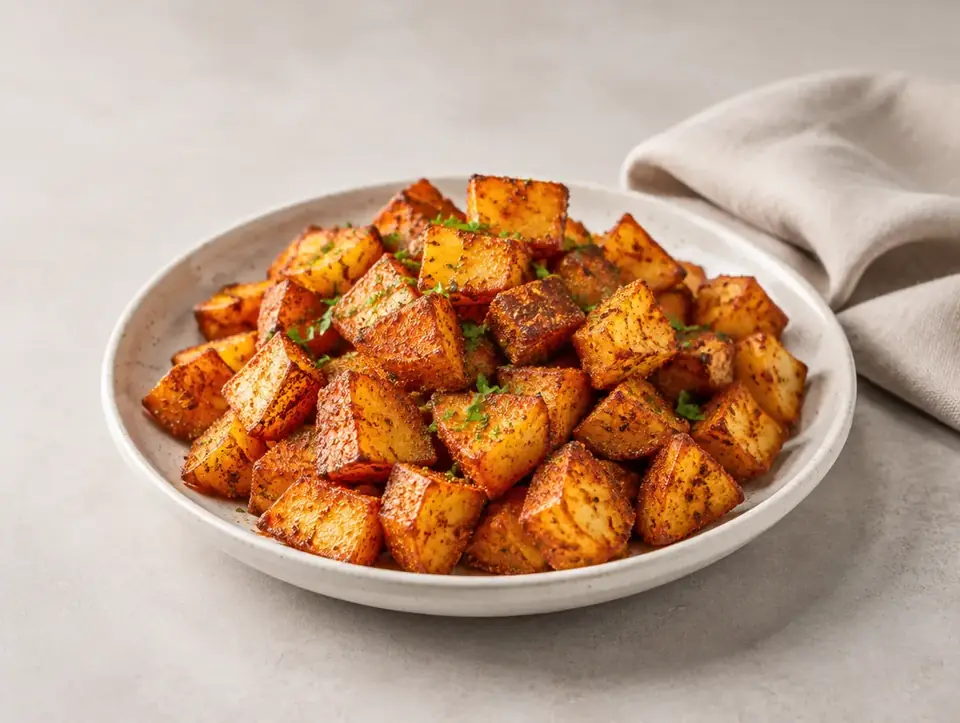
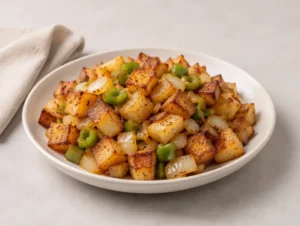
Sheet-pan cubes at 220°C, a paprika blend clinging to every face.
At a glance.
Breakfast Potatoes comes from North America · Brunch Cooking and appears in The Breakfast Atlas, in the chapter Bacon, Sausage & Hash. It serves 4, takes about 50 minutes, and uses 14 ingredients and 8 steps.
- Yield
- Serves 4
- Method
- Oven
- Time
- 50 minutes
Ingredients
Tap an ingredient to tick it off.
- For the potatoes
- For the breakfast seasoning blend (makes about 4 tbsp; keeps 3 months)
Method
-
Heat the oven to 220°C (425°F, fan 200°C) with a heavy rimmed sheet pan on the middle shelf. The pan must preheat with the oven; potatoes hitting hot metal sear on contact.
-
Cut the potatoes into cubes of genuinely equal size — a tray of mixed 2 cm and 4 cm pieces gives burnt corners and raw centers in the same mouthful — then rinse briefly in cold water and dry them thoroughly.
-
Toss the dry cubes with the oil alone, in a bowl, until every face is glossed. Do not add the spice blend now: paprika and garlic powder burn to bitterness at 220°C over 35 minutes.
-
Pull the hot pan out, tip the potatoes on and spread them in a single layer with space between the cubes. Listen for the hiss; if there is none, the pan was not hot enough.
-
Roast undisturbed for 20 minutes, until the undersides are set and golden and lift from the pan without tearing. Opening the door early costs you both heat and crust.
-
Turn the cubes with a thin metal spatula, scatter over the red onion wedges, and roast a further 12–15 minutes until deeply browned on at least two faces.
-
Pull the pan out, whisk the seasoning ingredients together, scatter over 3 tbsp and toss on the hot metal for 30–60 seconds. The residual heat blooms the spices without scorching them.
-
Finish with chives and a squeeze of lemon. For a crowd, use two pans on upper and lower shelves and swap their positions at the 20-minute turn.
Cook’s notes
- The technique
- Season at the end, not the beginning. Ground spices are mostly volatile oils held in fine particles with no moisture to protect them; on a bare tray at 220°C they pass their smoke point in minutes and turn acrid, and garlic and onion powders contain enough sugar to blacken outright. Oil first for the crust, spice last for the flavor, and use the pan's residual heat as the only cooking the blend gets.
- Make ahead
- The seasoning blend keeps three months in a sealed jar. Cut and rinse the potatoes the night before and hold them submerged in cold water in the fridge; drain and dry very thoroughly before oiling. Roasted potatoes recrisp in 8 minutes at 220°C.
- Troubleshooting
- Pale and leathery — the pan was cold, or the cubes were crowded so they steamed. Bitter, dark-flecked coating — the spice went on before roasting. Crisp shells with hollow, dry insides — the cubes were cut too small for the temperature; go up to 3 cm.
- Variations
- A Spanish version replaces the blend with 2 tsp pimentón de la Vera and serves them with aioli. A herby Mediterranean take uses rosemary, thyme and lemon zest added at the turn. Halved new potatoes, pressed flat before roasting, give more crust per potato. Waxy new potatoes need 10 minutes less at the same heat.
- Serve with
- Alongside baked eggs or a folded omelette, with hot sauce and soured cream. They hold well on a buffet, which is their real advantage. Bloody Mary, or coffee. A green herb salad keeps the plate from feeling heavy. Made in full within this recipe — Breakfast Potato Seasoning. Also listed in the Component Index at the back.

Where it comes from
The oven-roasted breakfast potato belongs to restaurant brunch rather than to the domestic griddle, and brunch is a documented invention. Guy Beringer proposed it in an 1895 essay, Brunch: A Plea, published in Hunter's Weekly, arguing for a late Sunday meal that would spare the Saturday-night reveller an early breakfast. The idea crossed to America and was commercialized between the wars, when big hotels in Chicago and New York built Sunday trade around it. A hotel kitchen plating forty covers at once cannot stand over a skillet turning potatoes, so the potatoes moved to sheet pans in a hot oven, seasoned in advance with a dry blend that could be mixed in quantity and kept in a jar. That blend — paprika, garlic and onion powders, oregano, a little sugar — descends directly from American barbecue rubs, which is why breakfast potatoes taste distinctly of the American South even when served in a Toronto café. Home cooks inherited the method once reliable thermostatic ovens became standard household equipment in the middle of the twentieth century.
Breakfast Potatoes: quick answers
How long does Breakfast Potatoes take?
About 50 minutes.
How many does this Breakfast Potatoes recipe make?
This recipe serves 4.
Where does Breakfast Potatoes come from?
The oven-roasted breakfast potato belongs to restaurant brunch rather than to the domestic griddle, and brunch is a documented invention. Guy Beringer proposed it in an 1895 essay, Brunch: A Plea, published in Hunter's Weekly, arguing for a late Sunday meal that would spare the Saturday-night reveller an early breakfast. The idea crossed to America and was commercialized between the wars, when big hotels in Chicago and New York built Sunday trade around it. A hotel kitchen plating forty covers at once cannot stand over a skillet turning potatoes, so the potatoes moved to sheet pans in a hot oven, seasoned in advance with a dry blend that could be mixed in quantity and kept in a jar. That blend — paprika, garlic and onion powders, oregano, a little sugar — descends directly from American barbecue rubs, which is why breakfast potatoes taste distinctly of the American South even when served in a Toronto café. Home cooks inherited the method once reliable thermostatic ovens became standard household equipment in the middle of the twentieth century.
More from United States
More in Bacon, Sausage & Hash
 Crispy BaconBritain & United States · Cured Pork
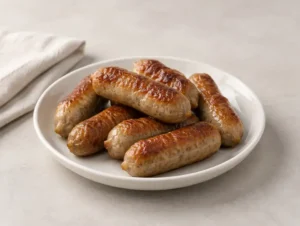 Breakfast Sausage LinksUnited States · Fresh Cased Sausage
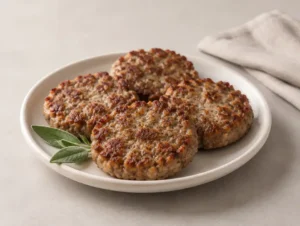 Sausage PattiesAmerican South & Midwest · Country Sausage
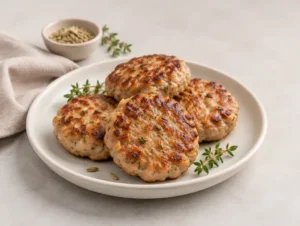 Turkey Sausage PattiesUnited States · Lean Breakfast Meats
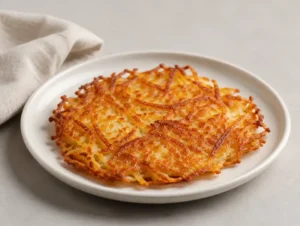 Hash BrownsUnited States · Diner Cooking
 Home FriesUnited States · Diner Griddle
https://www.atlasserie.com/recipes/breakfast/breakfast-potatoes/