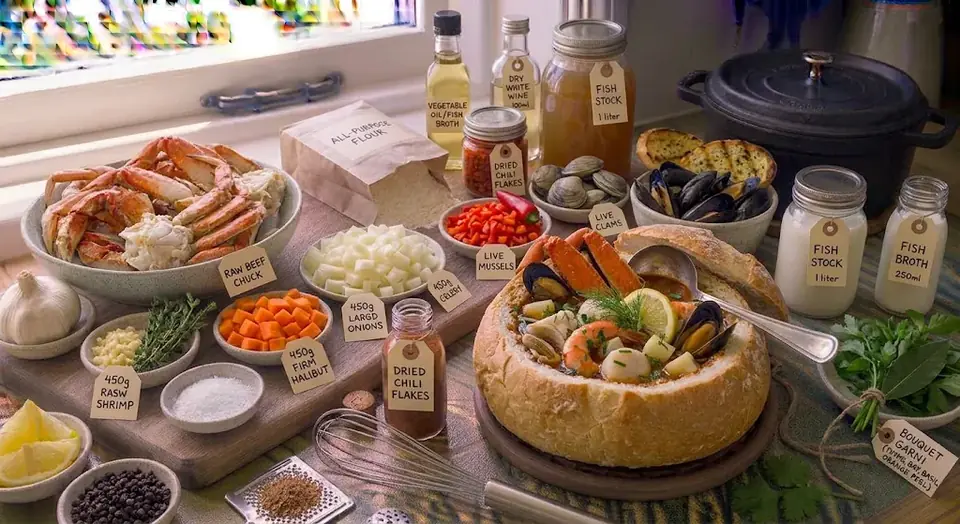
United States · San Francisco · 39.87° N, 98.73° W
Cioppino
Tomato, wine and fennel, loaded with shellfish and eaten with your hands.
At a glance.
Cioppino comes from United States · San Francisco and appears in The Soup Atlas, in the chapter Hearty Stews & Chowders. It serves 6, takes about 1 hr 15 min, and uses 25 ingredients and 10 steps.
- Yield
- Serves 6
- Method
- Stovetop
- Time
- 1 hr 15 min
Ingredients
Tap an ingredient to tick it off.
- For the base
- For the shellfish broth, if you are making it
- For the seafood, in cooking order
- For the garlic bread and the table
Method
-
If you are making the shellfish broth, sweat the shells in a splash of oil for 5 minutes until they smell sweet, add the vegetables, water and wine, and simmer for 25 minutes without a lid. Strain it and press the solids. Bought fish stock costs you about a third of the depth.
-
Sort the clams and mussels in cold water. Tap any that gape; discard anything that will not close, and pull the beards from the mussels by dragging them toward the hinge. Keep them in the fridge under a damp cloth, never sealed in a bag or sitting in fresh water.
-
Warm the olive oil in a wide, deep pot and cook the onion and fennel over medium-low heat for 12 minutes, until soft and sweet with no browning. Add the garlic, chili flakes, crushed fennel seeds and orange peel and stir for 2 minutes.
-
Pour in the wine, raise the heat and let it boil down by half, 4 minutes, scraping the base. Add the crushed tomatoes and cook them for 5 minutes, until they darken slightly and the liquid around them thickens.
-
Add the stock, bay and basil stalks and simmer uncovered for 25 minutes. The base should reduce to something loose but no longer watery, sweet from the fennel and clean at the finish. Season it now with the salt — every addition from here is seafood, and none of it wants long cooking.
-
Stop here if you are working ahead. The base is better for a night in the fridge, and building the dish in two stages is how a restaurant serves it in eight minutes.
-
Bring the base to a lively simmer. Add the crab sections first and give them 3 minutes to warm through and shed their sweetness into the broth, spooning liquid over the shells.
-
Add the clams and mussels, cover, and cook for 5 minutes until the shells gape. Take out any that opened early and set them in the serving bowl. Discard any that are still clamped shut once the rest have opened — they were dead before they went in.
-
Slide in the fish chunks and cook for 3 minutes, uncovered, without stirring. Then the shrimp and squid for 2 minutes, until the shrimp are coral through and the squid rings have turned white and firmed. Total time from the first clam is about ten minutes.
-
While that happens, grill the bread, rub the hot slices with the cut garlic and brush with oil. Take the pot off the heat, fold through the parsley, basil and reserved fennel fronds, taste for salt, and bring the whole thing to the table in the pot with tongs, ladles and empty bowls for shells.
Cook’s notes
- The technique
- Order is the entire method, and the reason is protein. Bivalves need enough heat and time to break the adductor muscle that holds them shut, roughly five minutes; fish flakes as soon as its proteins set at around 60°C in the center, three minutes for a 5 cm chunk; shrimp and squid go from raw to rubber in a window of about ninety seconds, as their proteins contract and squeeze out water. Stage them backward and everything finishes together. One safety rule sits inside the timing: any clam or mussel that will not open after cooking goes in the bin.
- Make ahead
- The tomato base is the make-ahead component and it genuinely improves — three days refrigerated, three months frozen. The shellfish broth keeps two days or freezes flat in bags. Nothing with a shell or a fin should be cooked in advance, and leftovers with seafood already in them are best eaten cold the next day rather than reheated, which cooks everything a second time.
- Troubleshooting
- Sandy broth — the clams were not purged; soak them 20 minutes in cold salted water before they go anywhere near the pot. Rubbery shrimp — they went in with the fish rather than after it. Thin and sharp — the base was not reduced for its full 25 minutes, or the tomatoes were underripe; a pinch of sugar and ten more minutes will settle both. Fish disintegrated — it was stirred.
- Variations
- Sicilian-leaning households in the Bay Area add a spoon of tomato paste and a handful of green olives. A Ligurian version dispenses with tomato almost entirely, closer to the ciuppin that named it, and passes the soup through a mill. Swap the crab for lobster tails on the East Coast, or for whole langoustines, and use whatever firm white fish your fishmonger has rather than insisting on halibut.
- To serve and keep
- Serve in wide, shallow bowls with a bowl for shells, a stack of napkins and shellfish crackers on the table. Grilled garlic bread is not optional; it is the spoon. Drink a chilled Vermentino, a Ligurian white or a light Barbera, and put a bib on anybody wearing white. Made in full within this recipe — Shellfish Broth, Tomato and Fennel Base, Grilled Garlic Bread. Also listed in the Component Index at the back.

Where it comes from
Cioppino belongs to the Italian fishermen of San Francisco, first Ligurians who settled around North Beach from the Gold Rush decades onward and later Sicilians, many from Isola delle Femmine, who came to dominate the crab fleet. The dish is a pot built from what each boat could spare, cooked on the wharf or at home from the unsellable end of the catch, and it took its present tomato-and-wine form in the city rather than in Italy. Its likeliest ancestor is ciuppin, a Ligurian fish soup whose name is generally traced to a dialect verb for chopping. The English folk etymology — that the name comes from crews being asked to chip in to a communal kettle — is a story told about the dish rather than evidence for it, and no documentation supports it. What is real is the seasonal rhythm: cioppino follows the Dungeness crab season, which opens in November, and it is a Christmas Eve dish in Italian-American households across the Bay Area.
Cioppino: quick answers
How long does Cioppino take?
About 1 hr 15 min.
How many does this Cioppino recipe make?
This recipe serves 6.
Where does Cioppino come from?
Cioppino belongs to the Italian fishermen of San Francisco, first Ligurians who settled around North Beach from the Gold Rush decades onward and later Sicilians, many from Isola delle Femmine, who came to dominate the crab fleet. The dish is a pot built from what each boat could spare, cooked on the wharf or at home from the unsellable end of the catch, and it took its present tomato-and-wine form in the city rather than in Italy. Its likeliest ancestor is ciuppin, a Ligurian fish soup whose name is generally traced to a dialect verb for chopping. The English folk etymology — that the name comes from crews being asked to chip in to a communal kettle — is a story told about the dish rather than evidence for it, and no documentation supports it. What is real is the seasonal rhythm: cioppino follows the Dungeness crab season, which opens in November, and it is a Christmas Eve dish in Italian-American households across the Bay Area.
More from United States



More in Hearty Stews & Chowders


https://www.atlasserie.com/recipes/soup/cioppino/