Spain · Tapas & Home Cooking · 40.32° N, 3.62° W
Spanish Tortilla
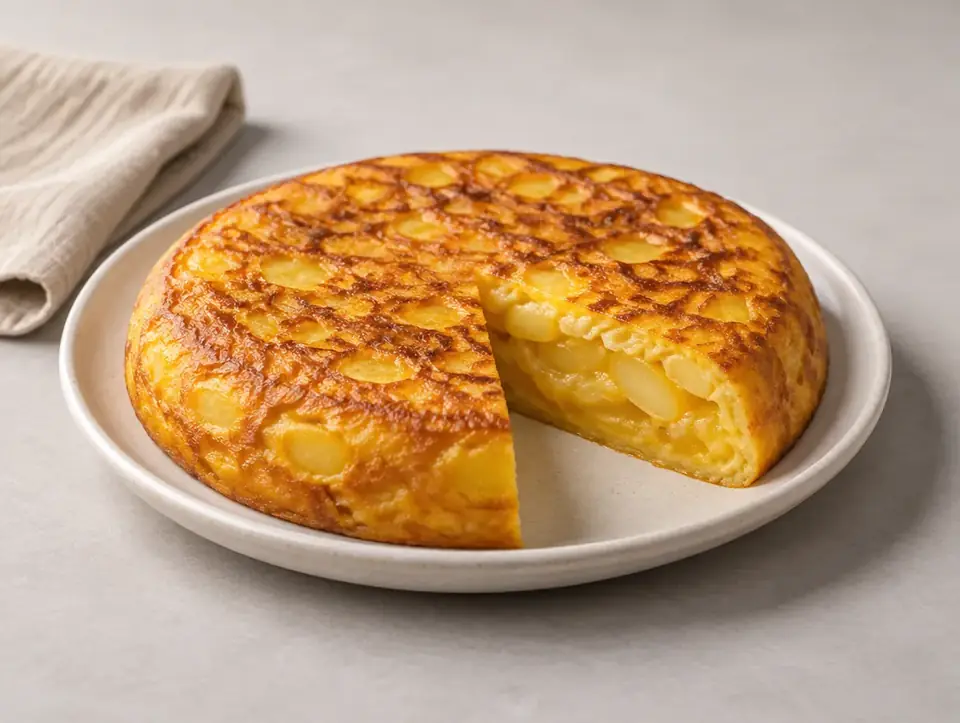
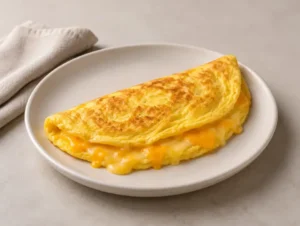
A deep potato cake bound in egg, golden outside and jugosa within.
At a glance.
Spanish Tortilla comes from Spain · Tapas & Home Cooking and appears in The Breakfast Atlas, in the chapter Eggs. It serves 6, takes about 55 minutes, and uses 6 ingredients and 10 steps.
- Yield
- Serves 6
- Method
- Stovetop
- Time
- 55 minutes
Ingredients
Tap an ingredient to tick it off.
Method
-
Slice the potatoes 3 mm thick — a mandoline helps — then break the slices apart with your hands rather than cutting neat rounds. Torn, irregular edges trap egg and hold the tortilla together.
-
Pour the oil into a 24 cm (10 in) deep skillet and warm it to about 130°C over medium-low heat. This is a confit, not a fry: the potatoes should barely bubble.
-
Add the potatoes and onion with 1 tsp of the salt. Cook 20–25 minutes, turning gently every few minutes, until a slice crushes without resistance against the side of the pan.
-
Drain in a colander set over a bowl, keeping the oil, and stand 5 minutes. Strained and cooled, that oil keeps for weeks and makes the next tortilla better.
-
Beat the eggs with the remaining salt and the pepper until uniform. Tip the warm potatoes and onion into them and press down so everything is submerged.
-
Rest the mixture 15 minutes, stirring once. Surface starch thickens the egg and the potatoes absorb it, which is what makes the interior custardy rather than layered.
-
Wipe the pan, return 2 tbsp of the reserved oil and set over medium-high heat. When it shimmers, pour in the mixture, spread it level, and drop the heat to medium-low.
-
Cook 4–5 minutes, drawing the edges inward and tilting so uncooked egg runs beneath. The sides should curve in and the base set to gold while the top still moves like loose custard.
-
Cover with a flat plate wider than the rim, press your palm to it, and invert in one committed motion over the sink. Slide the tortilla back in raw-side down and tuck the edges under.
-
Cook 3–4 minutes more for a jugosa center, or 6 for a firm one, then slide onto a serving plate and rest 10 minutes. It should wobble slightly when the plate is shaken.
Cook’s notes
- The technique
- The flip is the moment everyone fears, and the fix is mechanical rather than brave. Use a plate wider than the pan, take the pan off the heat first, keep the plate pressed flat against the rim, and turn the whole assembly as one unit in a single fast movement rather than tipping slowly. Loosen the edges beforehand, and never attempt it with a base still soft — the underside must be set and released.
- Make ahead
- Tortilla is arguably better an hour after cooking and is eaten at room temperature all over Spain. It keeps three days covered in the fridge; bring it back to room temperature, since cold dulls both egg and olive oil. Do not reheat a jugosa one — the loose center will cook through.
- Troubleshooting
- It breaks in the flip — the base was underset or the plate too small. Dry and layered inside — the resting step was skipped, so the egg never soaked in. Greasy — the potatoes went in before the oil was warm, or were not drained. Sticking — the pan was not hot enough when the mixture went in.
- Variations
- Tortilla de Betanzos, from Galicia, uses no onion and is barely set at all, close to pouring. In Andalusia, sliced green pepper or chorizo joins the potatoes. Tortilla paisana adds peas, red pepper and ham. A vegan version binds the potatoes with chickpea flour and kala namak.
- Serve with
- Cut into wedges with bread and alioli, or pack it into a crusty roll as a bocadillo de tortilla. Pimientos de Padrón and olives alongside. Drink a cold caña, a glass of Rioja, or vermut on ice.

Where it comes from
Spain's national dish is also its most argued-over. The earliest solid documentary trace is a Navarrese memorandum of 1817 addressed to the Cortes, describing tortilla made with potatoes and eggs as cheap, filling food for poor households; a widely repeated claim crediting a Joseph de Tena Godoy in Villanueva de la Serena in 1798 rests on far thinner evidence and is best treated as folklore. Potatoes had been in Spain since the sixteenth century but only became staple food in the hungry decades around the Napoleonic wars, which is when the dish makes sense as a way of turning a few eggs into a meal. It now sits on nearly every bar counter in the country, cut into wedges as a pincho, stuffed into a roll for a beach trip, eaten cold at midnight. The permanent national argument is cebolla sí or cebolla no — with onion or without — and it divides households and regions with real feeling. The second point of contention is doneness: a tortilla should be jugosa, its center loose and barely flowing.
Spanish Tortilla: quick answers
How long does Spanish Tortilla take?
About 55 minutes.
How many does this Spanish Tortilla recipe make?
This recipe serves 6.
Where does Spanish Tortilla come from?
Spain's national dish is also its most argued-over. The earliest solid documentary trace is a Navarrese memorandum of 1817 addressed to the Cortes, describing tortilla made with potatoes and eggs as cheap, filling food for poor households; a widely repeated claim crediting a Joseph de Tena Godoy in Villanueva de la Serena in 1798 rests on far thinner evidence and is best treated as folklore. Potatoes had been in Spain since the sixteenth century but only became staple food in the hungry decades around the Napoleonic wars, which is when the dish makes sense as a way of turning a few eggs into a meal. It now sits on nearly every bar counter in the country, cut into wedges as a pincho, stuffed into a roll for a beach trip, eaten cold at midnight. The permanent national argument is cebolla sí or cebolla no — with onion or without — and it divides households and regions with real feeling. The second point of contention is doneness: a tortilla should be jugosa, its center loose and barely flowing.
The same dish in another volume
More from Spain
More in Eggs
https://www.atlasserie.com/recipes/breakfast/spanish-tortilla/