Texas · Tex-Mex Breakfast · 39.87° N, 98.73° W
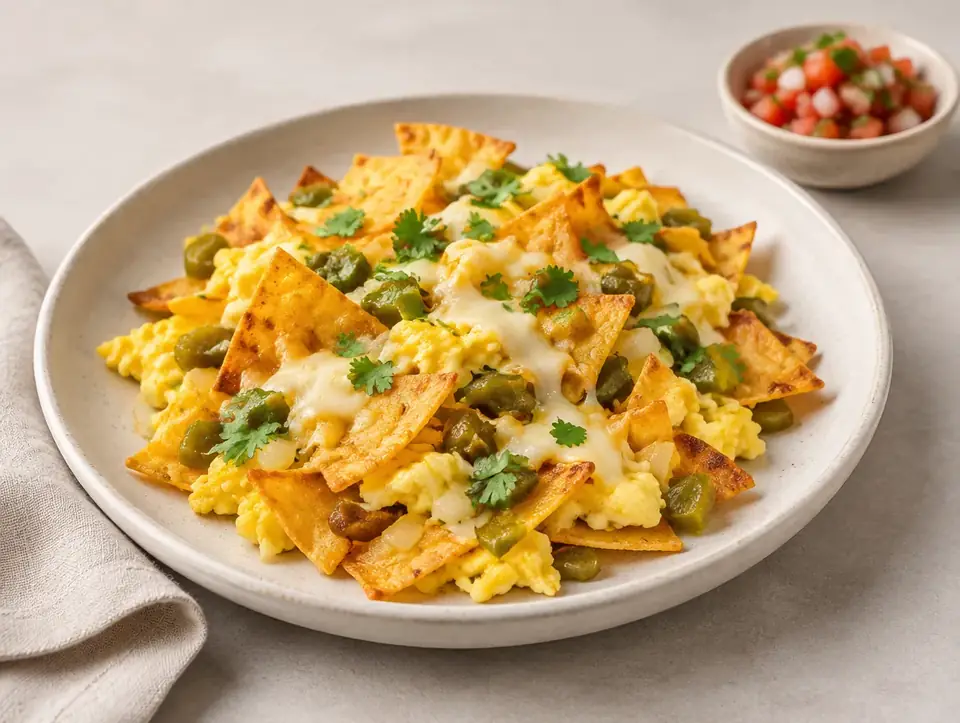
Migas
Corn tortilla fried crisp and folded through soft eggs with chile and cheese.
At a glance.
Migas comes from Texas · Tex-Mex Breakfast and appears in The Breakfast Atlas, in the chapter Eggs. It serves 2, takes about 20 minutes, and uses 13 ingredients and 10 steps.
- Yield
- Serves 2
- Method
- Stovetop
- Time
- 20 minutes
Ingredients
Tap an ingredient to tick it off.
Method
-
Cut the tortillas into strips about 1 cm wide and 4 cm long. Slightly stale tortillas hold their crunch far better than fresh ones, which carry more moisture and go leathery in the pan.
-
Heat the oil in a 24 cm (10 in) skillet over medium-high until a test strip sizzles on contact, around 175°C. Fry the strips in two batches for 2 minutes each, turning once.
-
Lift them out when deep gold and rigid — they should rattle against the spoon — and drain on kitchen paper with a pinch of salt. Pour off all but 2 tbsp of the oil.
-
Return the pan to medium heat. Add the onion and chile and cook 3 minutes until softened and translucent, scraping up any fried crumbs left behind.
-
Add the tomato, garlic and cumin and cook 2 minutes more, until the tomato collapses and the pan looks dry rather than watery. Liquid here will soften the tortillas on contact.
-
Beat the eggs with the milk and remaining salt. Turn the heat to low — Tex-Mex migas want soft, small curds, not the large folds of an American scramble.
-
Pour the eggs over the vegetables, let them sit 15 seconds, then stir slowly and continuously with a spatula, scraping the base as you go.
-
When the eggs are two-thirds set and still visibly wet, fold in three-quarters of the fried strips and all the cheese. The strips need only enough time to soften at the edges while staying crisp at the core.
-
Cook 30–45 seconds more, until the cheese melts into strands and the eggs look creamy and hold their shape on the spoon. Pull the pan off the heat.
-
Pile onto warmed plates, scatter the reserved crisp strips and the coriander over, and serve with lime wedges and salsa.
Cook’s notes
- The technique
- Timing the tortilla is everything, and the trick is to hold some back. Strips folded in early absorb egg and turn to soft dough; strips added right at the end stay brittle and separate from the eggs entirely. Adding most at the two-thirds mark and reserving the rest for the top gives both textures — chewy-soft inside, audibly crisp on the surface. Never leave freshly fried strips in a covered bowl, where their own steam ruins them.
- Make ahead
- Dice the onion, chile and tomato the night before and refrigerate. The tortilla strips can be fried up to four hours ahead and left uncovered on a rack. Migas themselves must be made and eaten immediately; the eggs weep and the tortillas go limp within minutes.
- Troubleshooting
- Soggy tortillas — fried too far in advance, or added too early. Greasy eggs — you did not pour off the frying oil. Dry, grainy eggs — the heat was too high; this needs a low, patient pan. Bland — salt the strips as they drain, which seasons them from the surface in.
- Variations
- The Spanish original, migas del pastor, fries dampened stale bread in olive oil with garlic and pimentón and serves it with chorizo and grapes. In New Mexico, migas take green chile in place of jalapeño. Chilaquiles are the near relative — the same fried tortilla, simmered in salsa rather than bound with egg.
- Serve with
- Refried beans, warm flour tortillas and sliced avocado make the standard Austin plate. Pico de gallo and pickled jalapeños on the side. Drink strong coffee, horchata, or a michelada if the morning has that character.

Where it comes from
Two dishes share this name, and both are built on the same thrifty instinct. In Spain, migas — crumbs — is shepherds' food from Extremadura, Aragón, La Mancha and Andalusia: stale bread dampened with salted water overnight, then fried slowly in olive oil with garlic and pimentón and eaten with chorizo, pork belly or, in season, grapes. It is winter food, cooked over fire, and it long predates the American version. In Texas and northern Mexico the same word attached to a different leftover. Corn tortillas past their best are cut into strips, fried until they snap, and folded into scrambled eggs with onion, tomato, chile and cheese. That version is the one Texans mean, and it moved from Tejano home kitchens onto restaurant menus in Austin and San Antonio through the 1970s and 1980s, becoming the defining Tex-Mex breakfast plate. Since a separate recipe in this book covers breakfast tacos, this one gives the Tex-Mex migas in full, plated rather than rolled.
Migas: quick answers
How long does Migas take?
About 20 minutes.
How many does this Migas recipe make?
This recipe serves 2.
Where does Migas come from?
Two dishes share this name, and both are built on the same thrifty instinct. In Spain, migas — crumbs — is shepherds' food from Extremadura, Aragón, La Mancha and Andalusia: stale bread dampened with salted water overnight, then fried slowly in olive oil with garlic and pimentón and eaten with chorizo, pork belly or, in season, grapes. It is winter food, cooked over fire, and it long predates the American version. In Texas and northern Mexico the same word attached to a different leftover. Corn tortillas past their best are cut into strips, fried until they snap, and folded into scrambled eggs with onion, tomato, chile and cheese. That version is the one Texans mean, and it moved from Tejano home kitchens onto restaurant menus in Austin and San Antonio through the 1970s and 1980s, becoming the defining Tex-Mex breakfast plate. Since a separate recipe in this book covers breakfast tacos, this one gives the Tex-Mex migas in full, plated rather than rolled.
More from United States




More in Eggs



https://www.atlasserie.com/recipes/breakfast/migas/