The Soup Atlas
Carrot Soup
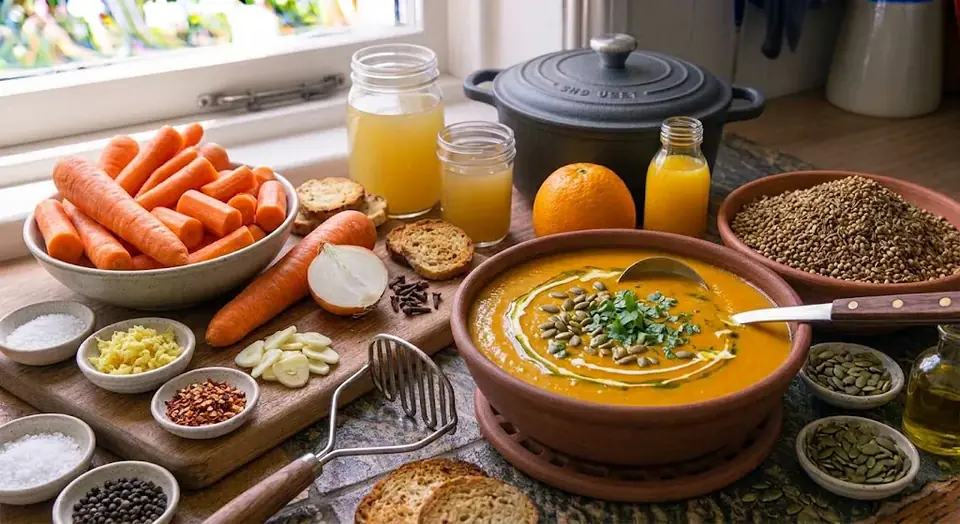
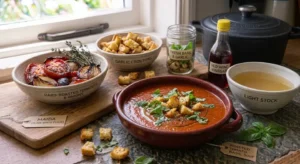
Roasted carrots with toasted cumin, cut back into balance with orange.
At a glance.
Carrot Soup is a recipe from The Soup Atlas, in the chapter Classic & Everyday Soups. It serves 4, takes about 1 hr 15 min, and uses 18 ingredients and 11 steps.
- Yield
- Serves 4
- Method
- Stovetop & Oven
- Time
- 1 hr 15 min
Ingredients
Tap an ingredient to tick it off.
- For the roasted carrots
- For the toasted spice butter
- For the soup
- To finish
Method
-
Bring the oven up to 220°C (425°F). Toss the carrot pieces with the olive oil, salt and pepper and spread them across a large tray with space between them. Cut them all to a similar thickness so they finish together rather than in waves.
-
Roast for 30–35 minutes, turning once at the halfway mark. They are ready when the edges have caught brown and shrunk and a knife goes through with no resistance. Boiled carrots leach their sugars into the water; roasted ones keep them and add more.
-
While they roast, toast the cumin and coriander seeds in a small dry pan over medium heat for 60–90 seconds, shaking constantly, until they darken a shade and smell nutty. Tip them straight out and grind them coarsely in a mortar.
-
Melt the butter in a heavy pot over medium-low heat and add the chopped onion. Cook for 8 minutes until soft and translucent, then add the garlic, ginger and chili flakes and cook for 2 minutes more.
-
Stir in the ground toasted spices and let them cook in the fat for 30–45 seconds, until the pot smells strongly of them. Spices are fat-soluble, and blooming them this way carries their flavor through the whole soup rather than leaving it as dust on the surface.
-
Add the roasted carrots and every scrap from the tray, then pour in the stock. Bring it to a gentle simmer and cook, half covered, for 15 minutes, so the carrots soften fully and the spice settles into the liquid.
-
Blend in batches, filling the jug no more than a third full, venting the lid and holding a folded towel over it. Carrot fiber is stubborn, so blend each batch for a full 90 seconds until it is completely smooth and glossy.
-
Return it to the pot and check the consistency. It should pour thickly and coat a spoon; let it down with stock if it is stiff, or simmer it uncovered for a few minutes if it is loose.
-
Stir in the cream or coconut milk over low heat, without boiling. Fat is not a luxury in a carrot soup — it rounds off the sweetness, carries the fat-soluble aromatics of the spices, and gives the soup the weight it otherwise lacks.
-
Now add the orange juice, off the heat, and taste. This is the moment the soup stops tasting like sweetened vegetable purée. If it still reads sugary, add the lemon juice or vinegar a teaspoon at a time until it turns savory.
-
Season with salt in stages — salt suppresses bitterness as much as it adds savor — and serve scattered with toasted pumpkin seeds and cilantro, with a thread of cream drawn across the surface.
Cook’s notes
- The technique
- Carrots run to roughly five percent sugar by weight, and roasting both concentrates that sugar and caramelizes part of it, which is why a roasted carrot soup starts out on the edge of dessert. Managing that sweetness is the whole job, and it takes two things. Acid comes first: orange juice, lemon or cider vinegar added off the heat drops the perceived sweetness sharply and reveals the savory notes hiding underneath. Fat comes second: cream, butter or coconut milk blunts the sugar, carries the fat-soluble carotenoids and spice compounds to the nose, and gives the spoon some resistance. A sweet vegetable soup with neither tastes like something made for a toddler.
- Make ahead
- This is one of the few blended soups that genuinely improves overnight, as the toasted spice settles and stops sitting on top. It keeps four days refrigerated and freezes for three months — freeze it before the cream and citrus go in, and add both on reheating, since citrus dulls in the freezer and dairy weeps. Reheat gently and re-taste for acid every time; it fades faster than salt does.
- Troubleshooting
- Cloying and sweet — no acid, or not enough; add citrus a teaspoon at a time. Fibrous and grainy — under-blended, or the carrots were old and woody; core the thick ends next time and blend longer. Muddy and dull — the spices were not toasted, or were added to liquid rather than fat. Thin — too much stock; simmer uncovered rather than adding starch.
- Variations
- The Moroccan route swaps cumin and coriander for ras el hanout and finishes with harissa and yogurt. A Vichy-style version poaches the carrots in butter and water with a little sugar instead of roasting, giving a paler, sweeter and more delicate soup. Carrot with red lentil — 100 g, added with the stock — becomes a bigger meal and thickens itself, which is the standard route in Turkish and Indian home kitchens.
- To serve and keep
- Serve in warm bowls with the seeds scattered late so they stay crisp. Flatbread or a seeded cracker suits it better than a soft loaf. Drink a dry Riesling or a Grüner Veltliner, both of which have the acidity to keep working with the orange. Made in full within this recipe — Roasted Carrots, Toasted Spice Butter. Also listed in the Component Index at the back.
Where it comes from
Carrots were domesticated in the region of modern Afghanistan and Iran around the tenth century, and they were purple and yellow rather than orange; the roots that reached medieval Europe by way of Moorish Spain were the same. Orange varieties appear in Dutch paintings and horticultural records from the sixteenth and seventeenth centuries, and the pleasing story that Dutch growers bred them orange to honor the House of Orange is repeated constantly and supported by nothing contemporary — the likelier account is that orange types were selected because they were sweeter and less woody, and their color happened to be convenient. The pigment gave chemistry a word: Heinrich Wackenroder isolated carotene from carrots in 1831. The vegetable's other great publicity campaign came in wartime Britain, where the Ministry of Food promoted Dr Carrot to a population short of sugar, and where the story that Royal Air Force pilots owed their night vision to carrots circulated as cover for airborne radar. Historians argue about how much anyone was actually fooled. The propaganda unquestionably existed, and it is why a generation grew up being told carrots help you see in the dark.
Carrot Soup: quick answers
How long does Carrot Soup take?
About 1 hr 15 min.
How many does this Carrot Soup recipe make?
This recipe serves 4.
Where does Carrot Soup come from?
Carrots were domesticated in the region of modern Afghanistan and Iran around the tenth century, and they were purple and yellow rather than orange; the roots that reached medieval Europe by way of Moorish Spain were the same. Orange varieties appear in Dutch paintings and horticultural records from the sixteenth and seventeenth centuries, and the pleasing story that Dutch growers bred them orange to honor the House of Orange is repeated constantly and supported by nothing contemporary — the likelier account is that orange types were selected because they were sweeter and less woody, and their color happened to be convenient. The pigment gave chemistry a word: Heinrich Wackenroder isolated carotene from carrots in 1831. The vegetable's other great publicity campaign came in wartime Britain, where the Ministry of Food promoted Dr Carrot to a population short of sugar, and where the story that Royal Air Force pilots owed their night vision to carrots circulated as cover for airborne radar. Historians argue about how much anyone was actually fooled. The propaganda unquestionably existed, and it is why a generation grew up being told carrots help you see in the dark.
More in Classic & Everyday Soups


https://www.atlasserie.com/recipes/soup/carrot-soup/