Greece · 39.32° N, 22.55° E
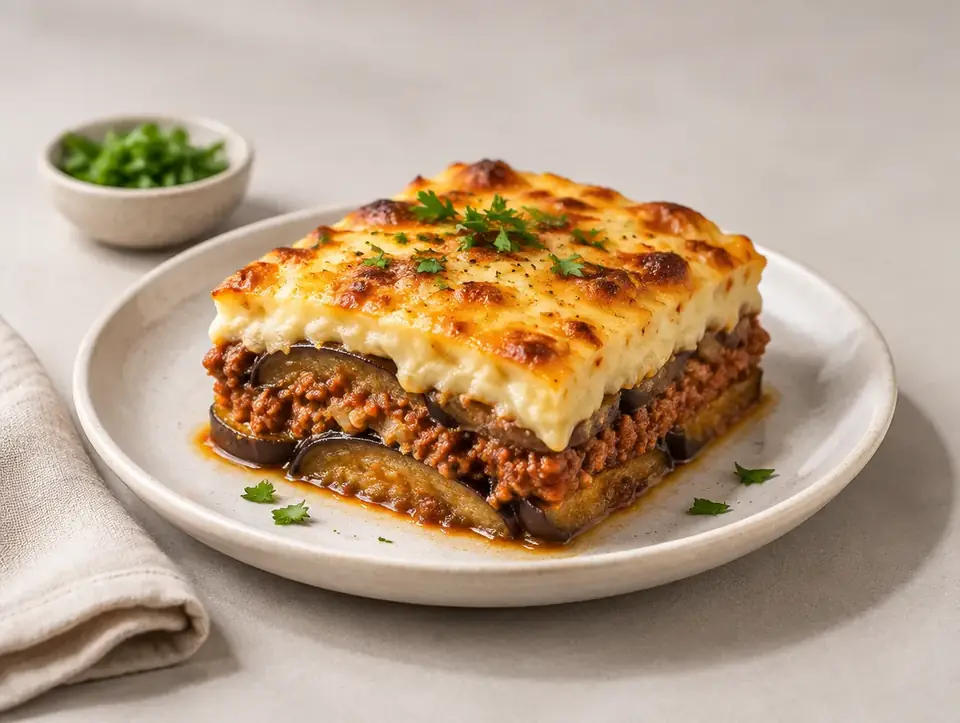
Moussaka
Layers of eggplant and spiced lamb under a thick, golden bechamel.
At a glance.
Moussaka comes from Greece and appears in The Dinner Atlas, in the chapter Dinner Around the World. It serves 6, bakes at 425°F (220°C) for 25 minutes, and uses 9 ingredients and 8 steps.
- Yield
- Serves 6
- Method
- Oven
- Oven
- 425°F / 220°C
- Bake
- 25 minutes
Ingredients
Tap an ingredient to tick it off.
Method
-
Salt the eggplant slices and drain them for 45 minutes, then squeeze them dry.
-
Brush them with oil and roast at 425°F (220°C) for 25 minutes rather than frying, which keeps the dish from being greasy.
-
Brown the lamb hard, then add the onions and garlic and cook until soft.
-
Add the cinnamon and allspice. These warm spices are the signature of Greek meat sauces and distinguish moussaka from lasagna.
-
Add the wine and tomatoes and simmer for 30 minutes until very thick, with no free liquid left.
-
Make the bechamel, cook it until it is thick enough to hold a ribbon, then beat in the egg yolks off the heat.
-
The yolks are what set the topping into a firm, sliceable custard rather than a runny sauce.
-
Layer eggplant, meat, eggplant, then the bechamel and cheese, and bake at 350°F (175°C) for 45 minutes until deep golden. Rest 30 minutes before cutting.

Where it comes from
The modern Greek moussaka, with its bechamel topping, was created in the 1920s by chef Nikolaos Tselementes, who was consciously Frenchifying Greek cooking. Older Balkan versions have no bechamel at all.
Moussaka: quick answers
How long does Moussaka take to bake?
Moussaka bakes at 425°F (220°C) for 25 minutes. Use the visual cues in the method as well as the clock.
How many does this Moussaka recipe make?
This recipe serves 6.
Where does Moussaka come from?
The modern Greek moussaka, with its bechamel topping, was created in the 1920s by chef Nikolaos Tselementes, who was consciously Frenchifying Greek cooking. Older Balkan versions have no bechamel at all.
What is the secret to a good Moussaka?
Cook the meat sauce until it is genuinely dry. Any liquid left in it will leak out under the bechamel.
More from Greece
More in Dinner Around the World
https://www.atlasserie.com/recipes/dinner/moussaka/